Spoiler Alert!
Leonard Reed, Rotary Club of Emmaus
You are not the only person throwing away fuzzy asparagus. Every week we perform the ritual on trash night c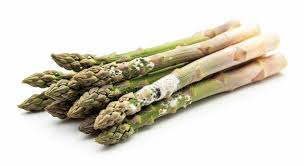 alled - I wonder what that used to be. We empty science experiments into the garbage, try to reclaim plastic containers, and swear we will do better next week. For the typical American home, food waste is a significant problem. At scale on the national level, it’s staggering, and as the adage goes, a goal without a plan is just a wish. Rotary is working on a plan.
alled - I wonder what that used to be. We empty science experiments into the garbage, try to reclaim plastic containers, and swear we will do better next week. For the typical American home, food waste is a significant problem. At scale on the national level, it’s staggering, and as the adage goes, a goal without a plan is just a wish. Rotary is working on a plan.So how bad is the problem of food waste in the United States? To fully understand the scope of the solution needed, the FDA used 2010 as a data baseline. Their research found that combined food loss from retailers to consumers constituted 31% total loss. That’s 133 billion 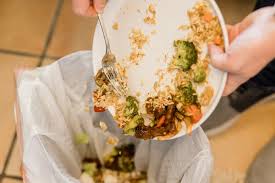 pounds of food worth $161 billion. The waste affects far ranging individual components like labor and energy used from production to shipping and distribution, as well as potential lost opportunities. Although there is movement at the federal level to reduce waste by 2030 through partnerships between the Food and Drug Administration (FDA), Environmental Protection Agency (EPA) and the U.S. Department of Agriculture (USDA), Rotary has focused our attention at the local community level with programs to reclaim unused food before it becomes waste, and reuse food waste through composting programs.
pounds of food worth $161 billion. The waste affects far ranging individual components like labor and energy used from production to shipping and distribution, as well as potential lost opportunities. Although there is movement at the federal level to reduce waste by 2030 through partnerships between the Food and Drug Administration (FDA), Environmental Protection Agency (EPA) and the U.S. Department of Agriculture (USDA), Rotary has focused our attention at the local community level with programs to reclaim unused food before it becomes waste, and reuse food waste through composting programs.In Frederick County Maryland Schools in 2018, Rotary Interact students launched a program called “Lunch Out of Landfills” to cut down on food waste in schools. With the help of five local Rotary clubs contributing funds from District Grants and money from local and state government, the program eventually grew to 14 schools. Initially set up to separate food into compostable and non-compostable waste, they also began collecting unopened food and partnering with local food banks and homeless shelters to further the benefits of cutting waste. Unfortunately, the pandemic halted the program, and through students graduating and faculty moving on, it has not been restarted to its peak scale.
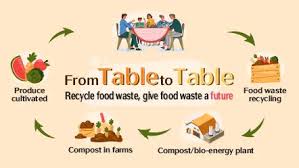
Last year, Rotary District 7430’s Environmental Sustainability Team began putting the pieces together to create a reusable blueprint to recreate a Lunch From Landfills-style program with a focus on composting organic food waste. First, we started by interviewing school district officials from Frederick Maryland to see what worked and what could be improved. Their primary strength was data collection being the foundation of their program. Starting with a food study, they were able to create solid base-line information from which they could view the problem accurately and create meaningful solutions.
Dawn Ashbacher, the Sustainability and Compliance Senior Manager for Frederick County Public Schools (FCPS) offered many pieces of advice, from the importance of involving custodial staff in the planning and implementation, to the FDA statutes covering food waste in schools. The most important part of creating and sustaining a food waste program in schools, Ashbacher says, is the volunteer faculty member who becomes the de-facto manager and Rotary liaison. Even with the number of high school volunteers through Rotary Interact who graduated and moved on, it was actually the retirement or leaving for new jobs elsewhere of faculty members that affected the implementation of the program the most. That’s why it became so important for our group to start with finding a foundational faculty member.
Dr. Seamus Clune of the Perkiomen Valley School District in Montgomery County has volunteered to be that faculty member, along with Dr. Beanne Berry of the Department of Sustainability at Ursinus College. Our initial plan is a food waste study at Skippack Elementary next year to lay the ground for a future composting program; first in one school, and then throughout the district. The long-term vision is a partnership with all stakeholders in creating a step-by-step blueprint that can be replicated by other Rotarians in their local school districts.
Currently, Rotary has partnered with Dr. Clune in a Vision Garden project at Skippack Elementary School. Through a grant from District Governor Mary Cook, and in collaboration with representatives of the Lenape tribe, students are planting a garden as they learn about the native tribes of Pennsylvania. The Three Sisters, corn, beans, and squash were traditionally grown as the corn provides support, the beans nutrients, and the wide squash leaves keep weeds down. Asparagus didn’t make the cut.
Resources
Leonard Reed
Rotary Club of Emmaus
Environmental Sustainability Team