Why We Support Native Plant Pollinator Gardens
Rick Morrissey, Rotary Club of Bethlehem Morning Star
and
Kay Greenawalt, Rotary Club of Hamburg
For many years, almost exclusively, non-native plants sold in our garden centers have focused on ornamental characteristics: pretty flowers, a specimen for a hedge or a foundation plant as a home accent. Now, the question we should all consider before purchasing a plant for our
landscape is, “What is its ecological function?” In other words, what does this plant DO for pollinators such as bees, other beneficial insects, birds, and wildlife to support a biodiverse ecosystem?
Native plants are a vital part of our ecosystem, unlike exotic, non-native plants, which can be invasive and 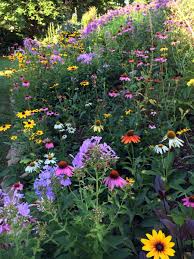 disruptive to local habitats. Plants are supposed to pass the energy that they capture from the sun up the food chain. Insects transfer energy from plants to other animals that cannot eat plants directly. Native plants and native insects provide the foundation for this pathway, and sadly, non-native plants provide very little or no food value for local wildlife. No one says this better and so succinctly as Dr. Douglas Tallamy, professor of Entomology and
disruptive to local habitats. Plants are supposed to pass the energy that they capture from the sun up the food chain. Insects transfer energy from plants to other animals that cannot eat plants directly. Native plants and native insects provide the foundation for this pathway, and sadly, non-native plants provide very little or no food value for local wildlife. No one says this better and so succinctly as Dr. Douglas Tallamy, professor of Entomology andWildlife Ecology at the University of Delaware, and author of Bringing Nature Home, “A plant that has fed nothing has not done its job.”
Since its inception in 2022, the District Environmental Sustainability Team has encouraged individual clubs to plant pollinator gardens in their communities in collaboration with county and municipal park departments. Native gardens offer a wide range of colors, textures and forms that reflect the unique natural heritage of local landscapes.
The District Team’s first pilot project was the creation of a community native plant garden located at a Boy Scout/Girl Scout Camp in Northern Berks County. The site is Camp Edmar, located between Kutztown and I-78, spearheaded by PDG Bob Hobaugh and funded through a District Grant. Girl Scouts built bee boxes to attract native bees, and Rotarians from the Kutztown Club routinely help with the maintenance of the garden. Now in its third growing season, the three beds in the garden are thriving. And they certainly are attracting native bees and butterflies.
Rotary Clubs around the District have created Pollinator Gardens, even pre-dating the Environmental Sustainability Committee. A great example is the Hamburg Rotary Club, which took over maintaining a pollinator garden started by a Girl Scout Gold Award Project at the
Kernsville Dam about four years ago. It was so successful that it led to three more gardens in and adjacent to Hamburg Park. Why stop here? The Hamburg Club created a Rotary Helping Hands Satellite Club who maintain these gardens which is a key component of successful gardening.
More recently, the Fleetwood Club planted a pollinator garden in Fleetwood Borough’s community park. The project was so successful that the club then decided to apply for a District Grant to partially fund two more gardens, one each in the other municipalities, that the club
serves, Maidencreek and Richmond Townships.
And last year, the Collegeville club assisted the Perkiomen Valley School District in the planting of an educational pollinator garden at each 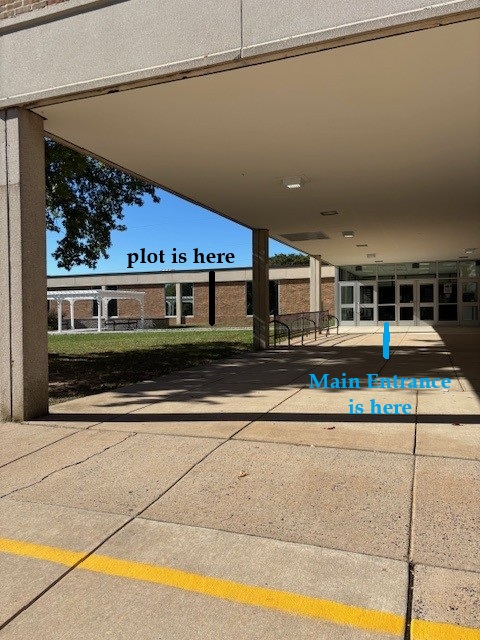 of the District’s two middle schools. The gardens are part of the school’s outdoor environmental education center, called PV Woods.
of the District’s two middle schools. The gardens are part of the school’s outdoor environmental education center, called PV Woods.On the horizon in 2026 are pollinator garden projects by the Bethlehem and Warminster Rotary Clubs. Bethlehem Rotarians are updating a city pocket park, the Sand Island Centennial Children’s garden, with the addition of native plants, which will be completed this May.
Warminster Rotarians are partnering with the Log College Middle School (pictured left) with their plans for 21’ X 24’ educational pollinator garden. The Warminster Club has applied for a grant from their own foundation and a District 7430 Grant to install professional ‘hog wire’ fencing for this garden.
Pollinator Gardens are an easy and rewarding project for Rotarians to do in their local communities. And, they help to bring back the declining insect populations that we so desperately need.
Rick Morrissey
Rotary Club of Bethlehem Morning Star
District Environmental Sustainability Team
Kay Greenawalt
Rotary Club of Hamburg
District Environmental Sustainability Team