
Getting Rid of Those Nasty Invasive Plants Along Streams
Terry L. Reed, Director, District Environmental Sustainability Team
More than 28,000 miles or 1/3 of all Pennsylvania waterways are impaired in some way. In the Pennsylvania Department of Environmental Protection’s 2026 Integrated Water Quality Report, DEP states that about 37% of stream miles in Pennsylvania are now classified as impaired. The trend is going the wrong way. Two years ago, the number stood at 34%.
The major threats to our streams are agricultural runoff, acid mine drainage, and urban sprawl. During heavy rains, stormwater runoff finds its way to streams and lakes. The flowing water carries with it soil from fields and paved areas. This runoff contains pesticides, fertilizers, and other contaminants such as oils, greases, and heavy metals.
But that’s only part of the problem. Another serious issue along streams is the invasion of nonnative plants. Eastern Pennsylvania seems to 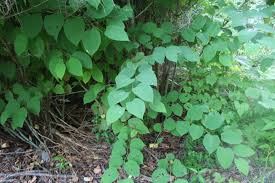 be overrun with herbaceous and woody plants that are not native to the region. They are foreigners in the aquatic ecosystem. More than 140 invasive plant species live in the state, many of them inhabit the areas around streams. Invasive species such as honeysuckle, Japanese knotweed (pictured left), purple loosestrife, and phragmites are all too common on stream banks, causing negative impacts to native plants and water quality.
be overrun with herbaceous and woody plants that are not native to the region. They are foreigners in the aquatic ecosystem. More than 140 invasive plant species live in the state, many of them inhabit the areas around streams. Invasive species such as honeysuckle, Japanese knotweed (pictured left), purple loosestrife, and phragmites are all too common on stream banks, causing negative impacts to native plants and water quality.Invasives were introduced to the environment from outside of an ecosystem with characteristics that help them dominate and limit the diversity of species within the invaded area. They tend to spread aggressively and reproduce rapidly. They easily out-compete native plants for light, space, and nutrients. Invasive species often absorb more nutrients, leading to nutrient depletion in water bodies. They can increase sedimentation by destabilizing soil and riverbanks.
And, the leaves of some invasive species decompose much faster than native trees, causing oxygen depletion in the stream, negatively impacting benthic communities and coldwater fish, like trout.
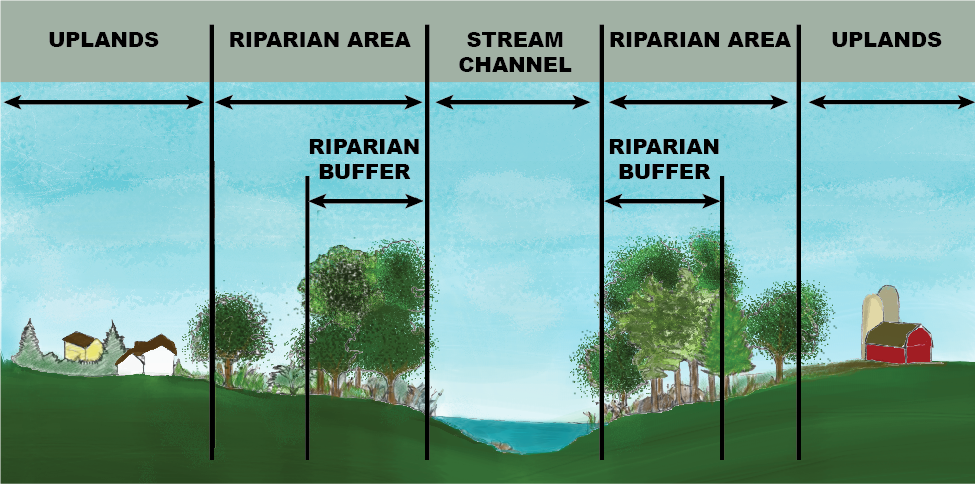
Once invasive plants are established along a waterway, they are extremely difficult to control. Rotarians in our District have been working with watershed associations and other environmental groups to remove invasive plants and replant stream banks to create a new riparian buffer. That’s the land and plants that border rivers, streams, bays, and other waterways.
Riparian buffers are an important aspect of an aquatic environment. The plants stabilize the stream banks and help to prevent sedimentation of waterways. Through shading, native plants reduce swings in stream temperatures and prevent elevated temperatures harmful to aquatic life. And, they have the ability to replenish groundwater and protect associated wetlands.
The Emmaus club has been working with the Wildlands Conservancy on a riparian buffer project to remove Japanese knotweed from the banks of Little Lehigh Creek in Lehigh County and replace it with native plants.
The West Reading-Wyomissing club currently has a District Grant to assist the Borough of Wyomissing in the removal for honeysuckle and other invasives along Wyomissing Creek, a Class A trout stream in Berks County. They are also planting native tree species like swamp oak, sycamore, and hackberry along the creek to recreate a native riparian buffer.
And in Lebanon County, the Palmyra club has spent years working on a restoration project on Quittapahilla Creek, helping to restore the waterway to a trout stream.
Maybe there’s a stream in your area that could use some stewardship by removing invasive plants and replacing them with native trees and shrubs. Your club can easily get involved in a riparian buffer project by collaborating with a watershed association or Trout Unlimited chapter in your area.
Terry Reed
West Reading-Wyomissing Rotary Club
District Environmental Sustainability Team